
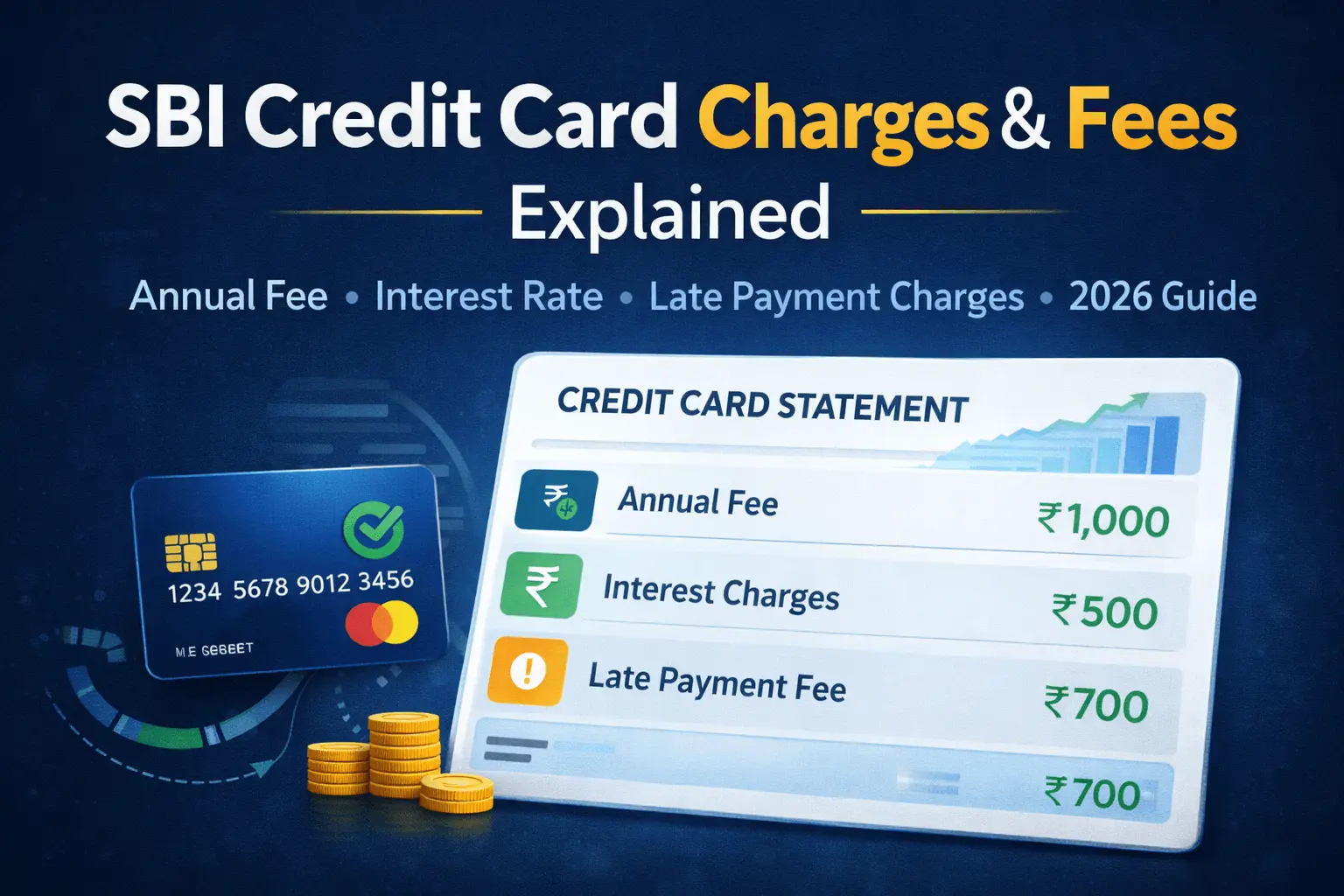
Understand annual fees, interest rates, late payment charges, and hidden costs before using an SBI credit card
Credit cards have become a common financial tool for millions of Indians. From online shopping to travel bookings and bill payments, they offer convenience and rewards. However, every credit card comes with a cost structure. Understanding SBI credit card charges & fees is essential for responsible usage and better financial planning.
India’s digital payments ecosystem has expanded rapidly in recent years. According to data from the Reserve Bank of India, credit card usage and transaction volumes have steadily increased as consumers adopt digital financial services. At the same time, regulators emphasize transparency in pricing and consumer protection.
For salaried professionals, business owners, and first-time credit card users, understanding these charges can prevent unnecessary financial stress. Many users focus on rewards and cashback but overlook fees such as annual charges, interest on outstanding balances, or cash withdrawal costs.
This guide explains the SBI credit card fee structure, including annual fees, late payment penalties, interest rates, and additional charges that may apply in different situations.
If you are new to SBI credit cards, you should first read our complete
SBI Credit Card Guide where we explain eligibility, benefits, and card types.
What Are SBI Credit Card Charges & Fees?
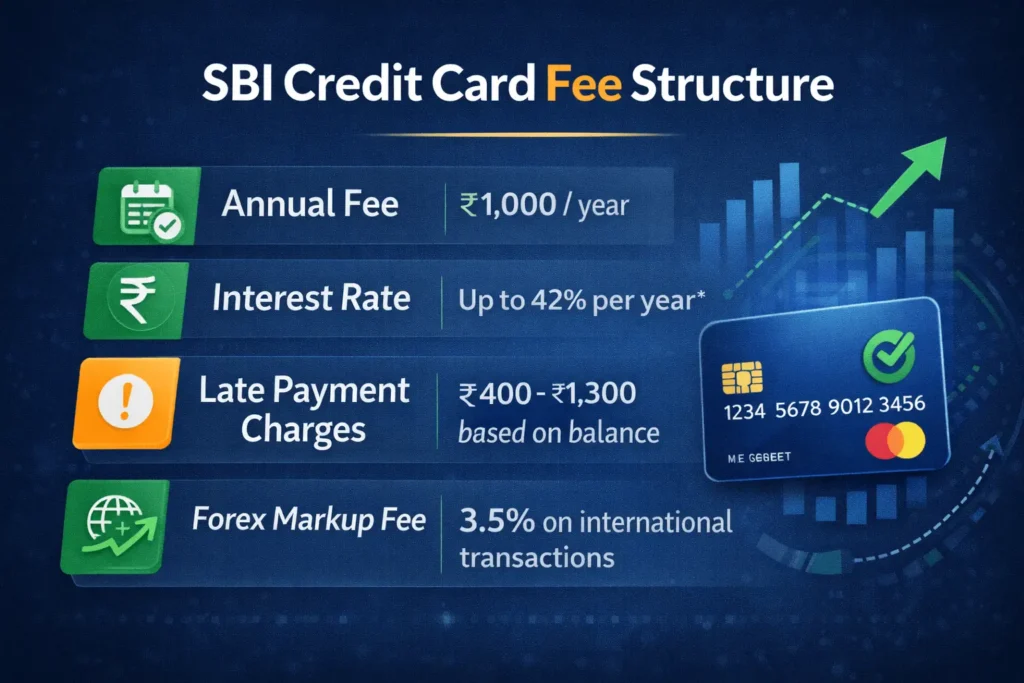
Credit card issuers charge different types of fees depending on how the card is used. These charges cover services such as card issuance, maintenance, borrowing costs, and special transactions.
For SBI credit cards, the fee structure generally includes:
- Joining or issuance fee
- Annual or renewal fee
- Interest on unpaid balances
- Late payment charges
- Cash withdrawal charges
- Foreign transaction fees
- Processing charges for EMI conversions
Understanding each component helps cardholders avoid unnecessary penalties and manage their finances better.
SBI Credit Card Joining Fee and Processing Fee
Most credit cards charge a joining fee when the card is issued. This fee depends on the specific card variant and benefits offered.
The sbi credit card joining fee typically applies only once during the initial issuance. Premium cards may charge a higher fee because they offer additional benefits such as lounge access, travel rewards, or premium concierge services.
Some services may also involve a sbi credit card processing fee, particularly when converting large purchases into EMI plans. Processing fees usually apply as a small percentage of the transaction or as a fixed amount.
Cardholders should always check the latest fee schedule on the official website of SBI Cards and Payment Services Limited before applying.
SBI Credit Card Annual Fee and Renewal Charges
Another common charge is the sbi credit card annual fee, also known as the card maintenance fee. This fee helps cover the cost of maintaining the credit account and providing benefits associated with the card.
Many cards also charge sbi credit card renewal charges, which apply every year after the first year.
However, several cards provide sbi credit card annual fee waiver conditions. These conditions usually require the cardholder to spend a specific amount annually. If the spending threshold is met, the annual fee may be waived.
This structure encourages active card usage while rewarding regular customers.
SBI Credit Card Interest Rate Per Month
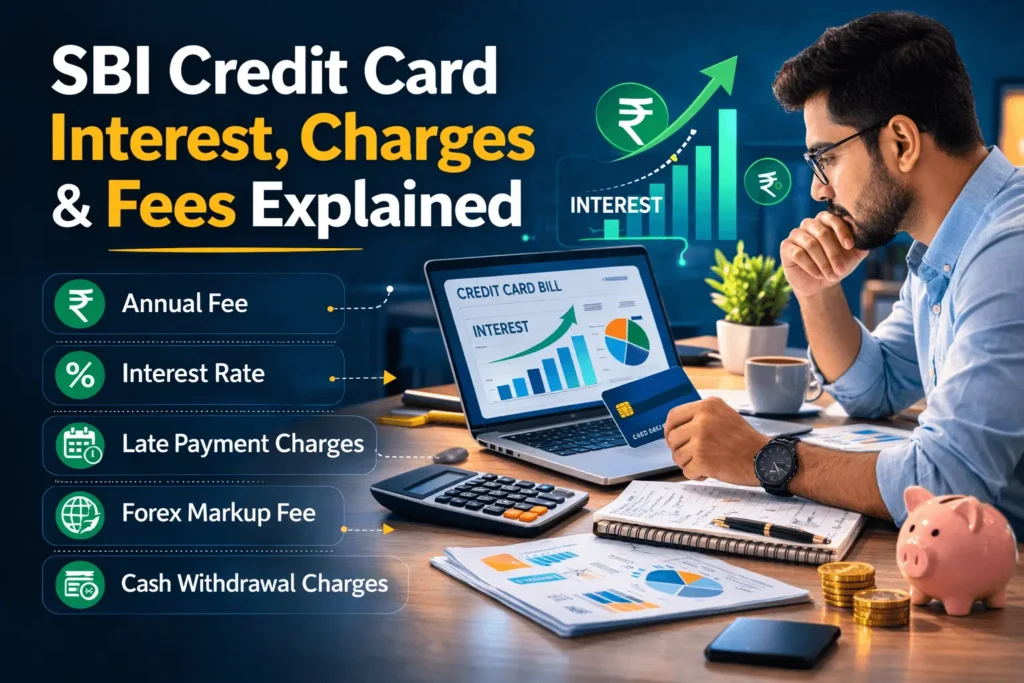
Interest applies when the cardholder does not pay the full outstanding balance by the due date. This is known as revolving credit.
The sbi credit card interest rate per month depends on several factors, including credit profile, payment history, and card type. Interest applies on:
- Outstanding balance
- New transactions made after the billing cycle
- Cash advances
Many users ask, how much interest does SBI credit card charge. The exact rate varies across cards and customer risk profiles. However, the interest rate is clearly disclosed in the card agreement and official fee schedule.
According to guidelines issued by the Reserve Bank of India, banks and card issuers must transparently disclose all interest rates and charges to customers.
SBI Credit Card Late Payment Charges
Missing a payment due date triggers sbi credit card late payment charges. These charges depend on the outstanding balance amount.
Late payments can also affect the cardholder’s credit score because payment history forms a major component of credit assessment.
Credit bureaus such as TransUnion CIBIL track repayment behaviour. Even a single delayed payment can reduce the credit score temporarily.
For this reason, financial advisors recommend enabling automatic payments or reminders to avoid sbi credit card late payment fee 2026 and protect credit health.
SBI Credit Card Cash Withdrawal Charges
Credit cards allow users to withdraw cash from ATMs, but this option comes with additional costs.
The sbi credit card cash withdrawal charges typically include:
- Cash advance fee charged at the time of withdrawal
- Interest charged immediately from the withdrawal date
Unlike regular purchases, cash withdrawals do not get an interest-free period.
The sbi credit card cash advance interest rate usually applies from the day the cash is withdrawn until repayment is made.
Because of these costs, financial experts advise using credit cards for purchases rather than ATM withdrawals.
SBI Credit Card Overlimit Charges
Each credit card comes with a fixed credit limit. If spending crosses that limit, the issuer may allow the transaction but apply sbi credit card overlimit charges.
This fee discourages excessive borrowing and helps cardholders stay within their approved credit capacity.
Maintaining spending below the credit limit also helps protect credit scores because high utilization ratios can negatively affect credit profiles.
SBI Credit Card International Transaction and Forex Fees
When cardholders use their credit cards outside India or on international websites, additional charges may apply.
The sbi credit card forex markup fee applies when transactions occur in foreign currency. This fee compensates the card issuer for currency conversion and international processing costs.
Similarly, the sbi credit card international transaction fee may apply depending on the type of transaction and payment network used.
Frequent international travelers often choose specialized cards that offer lower forex markup fees.
EMI Processing Fee and Balance Transfer Charges
Many consumers convert large purchases into monthly installments for easier repayment. In such cases, issuers may charge an sbi credit card emi processing fee.
This fee covers administrative and operational costs for setting up the installment plan.
Another common service is balance transfer, where cardholders move outstanding balances from one credit card to another.
The sbi credit card balance transfer fee may apply for this facility, depending on promotional offers and card terms.
Other Possible SBI Credit Card Charges
Apart from major fees, several smaller charges may apply depending on specific situations.
These may include:
SBI credit card fuel surcharge charges
Fuel transactions sometimes include a surcharge depending on merchant category and transaction value.
SBI credit card replacement card fee
If a card is lost, damaged, or stolen, a replacement card may involve a small charge.
SBI credit card statement duplicate charge
Requesting duplicate physical statements may incur administrative fees.
SBI credit card payment bounce charges
If a payment fails due to insufficient bank balance, a penalty may apply.
Although these charges occur less frequently, users should still understand them to avoid surprises.
How SBI Credit Card Charges Affect Credit Score
Credit card fees and payment behaviour can influence the credit score.
Credit bureaus such as TransUnion CIBIL evaluate several factors, including:
- Payment history
- Credit utilization ratio
- Credit account age
- Number of credit inquiries
Late payments, over-limit spending, or unpaid balances can negatively affect credit scores. Maintaining disciplined repayment habits helps improve financial credibility.
Tips to Avoid Unnecessary SBI Credit Card Charges
Responsible credit card usage can significantly reduce the total cost of borrowing.
Here are practical strategies:
Pay the full outstanding balance each month
This prevents interest charges.
Track billing cycles and due dates
Setting automatic reminders can help avoid late payment penalties.
Use EMI conversion carefully
Check the processing fee before converting transactions.
Stay within your credit limit
Avoid overlimit charges and protect your credit score.
Use cash withdrawal only in emergencies
ATM withdrawals trigger immediate interest and extra fees.
These habits help users maximize benefits while minimizing costs.
Regulatory Oversight and Consumer Protection
Credit card pricing and transparency in India fall under the regulatory supervision of the Reserve Bank of India.
The RBI has introduced guidelines requiring:
- Transparent disclosure of interest rates
- Clear communication of fees and penalties
- Fair practices for billing and grievance redressal
These rules aim to protect consumers and ensure responsible lending practices across the banking sector.
Future Outlook for Credit Card Costs
India’s credit card market continues to expand as digital payments grow and financial inclusion improves. Government initiatives supporting digital transactions and fintech innovation are also accelerating adoption.
However, regulators and policymakers continue to emphasize responsible credit usage and consumer awareness.
For cardholders, understanding SBI credit card charges & fees remains essential. Transparent information and disciplined usage can help consumers enjoy the benefits of credit cards without falling into debt traps.
Conclusion
SBI credit cards offer convenience, rewards, and financial flexibility. However, every card comes with a structured fee system that includes annual fees, interest charges, and service-related costs.
Understanding key components such as sbi credit card annual fee, sbi credit card late payment charges, sbi credit card cash withdrawal charges, and sbi credit card forex markup fee helps users make informed financial decisions.
Before applying for any credit card, consumers should review the official fee schedule, compare card features, and ensure the card aligns with their spending habits.
Responsible usage not only helps avoid unnecessary charges but also strengthens financial discipline and credit health over the long term.
What is SBI credit card annual fee?
The SBI credit card annual fee is a yearly maintenance charge for using the credit card. The fee amount depends on the card variant and benefits offered. Entry-level cards usually have lower annual fees, while premium cards with travel or lifestyle benefits may charge higher annual fees. Cardholders should always check the latest fee structure on the official website of SBI Cards and Payment Services Limited before applying.
What happens if SBI credit card payment is late?
If an SBI credit card payment is late, the issuer may apply late payment charges based on the outstanding balance. In addition to the penalty fee, interest may also be charged on the unpaid amount. Late payments can also negatively impact the cardholder’s credit score tracked by agencies such as TransUnion CIBIL, which may affect future loan approvals.
How much interest does SBI charge on credit cards?
The interest rate on SBI credit cards varies depending on the card type and the customer’s credit profile. Interest is charged when the cardholder does not pay the full outstanding balance by the due date. The applicable interest rate is mentioned in the card’s terms and conditions and must be disclosed clearly under guidelines from the Reserve Bank of India.
Can SBI credit card annual fee be waived?
Yes, in many cases the SBI credit card annual fee can be waived if the cardholder meets certain annual spending requirements. Some cards offer a fee waiver after reaching a specific yearly spending threshold. These conditions vary by card type, so customers should review the official card benefits and fee waiver policy before applying.
Does SBI charge for international transactions?
Yes, SBI credit cards may charge a foreign currency conversion or forex markup fee when transactions are made in international currencies. This charge covers currency conversion and international processing costs. The exact rate depends on the credit card variant and the payment network used.
What are SBI credit card cash withdrawal charges?
SBI credit card cash withdrawal charges apply when a cardholder withdraws cash from an ATM using the credit card. This usually includes a cash advance fee and immediate interest on the withdrawn amount. Unlike regular purchases, cash withdrawals typically do not get an interest-free period.
How can I check SBI credit card charges and fees?
Cardholders can check the latest charges through the official website of SBI Cards and Payment Services Limited, the monthly credit card statement, or the mobile app. Reviewing the statement regularly helps track fees and avoid unexpected charges.
Do SBI credit cards charge interest on every transaction?
No, interest is not charged if the cardholder pays the full outstanding balance before the due date. However, if only the minimum amount due is paid, interest may be charged on the remaining balance and new transactions.
Can SBI credit card charges affect your credit score?
Yes, late payments, missed payments, or exceeding the credit limit can negatively affect your credit score. Credit bureaus such as TransUnion CIBIL track repayment behavior and update credit reports accordingly.

Sachin is a professional blogger who believes in “Human-First” content. He specializes in breaking down complicated tech and finance topics into simple, actionable steps. His goal is to empower users with the right knowledge to make smarter digital decisions.